iDoc-HMS
A comprehensive hospital management environment supporting clinical, administrative and financial workflows — from patient registration and consultation to inpatient management, pharmacy, billing and operational reporting.
Modern healthcare requires more than isolated software applications. Our healthcare engineering experience brings together hospital management, electronic medical records, diagnostic imaging and operational intelligence — with AI-assisted radiology capabilities designed to support clinicians within their existing workflows.
Hospital care, medical imaging and diagnostic operations generate different kinds of information, but they are part of the same patient journey. The iDoc ecosystem brings specialised capabilities to these connected areas.
A comprehensive hospital management environment supporting clinical, administrative and financial workflows — from patient registration and consultation to inpatient management, pharmacy, billing and operational reporting.
A medical imaging environment supporting DICOM-based workflows, image viewing and AI-assisted identification of potentially abnormal studies for radiologist review.
A diagnostic operations platform connecting patient registration, service workflows, billing, queue management and operational analytics across diagnostic centres.
A connected healthcare environment reduces the need to manage patient information through disconnected operational processes. Clinical encounters, diagnostic requests, treatment records and administrative transactions can be organised around a continuous patient journey.
Clinical care and hospital administration depend on reliable workflows. The HMS platform supports day-to-day patient services while connecting the information needed by doctors, nurses, administrators and operational teams.
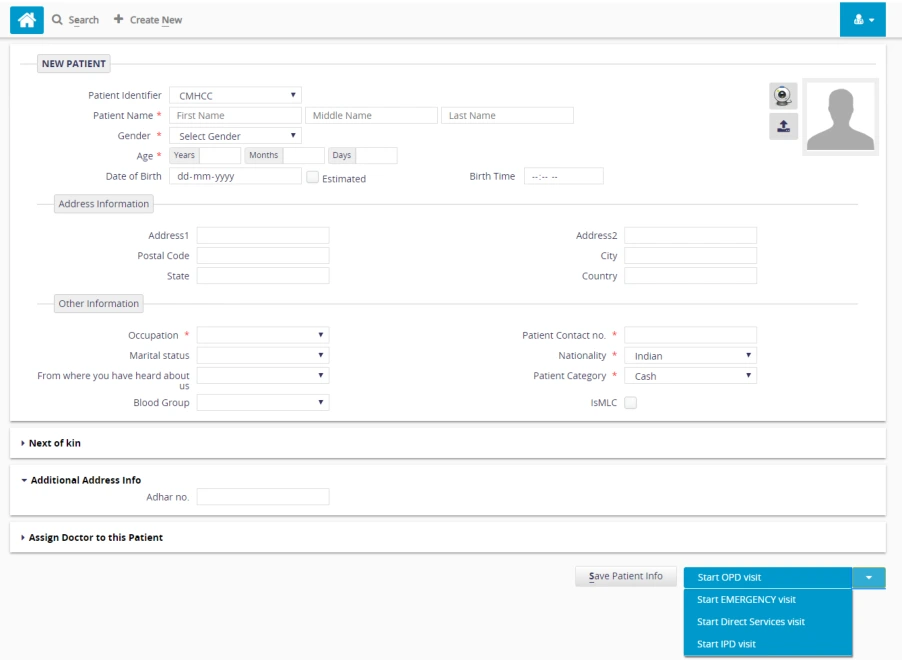
Create and manage patient records, demographic details and registration workflows across hospital services.
Organise outpatient, inpatient and emergency encounters through dedicated clinical queues and service workflows.
Maintain clinical observations, history, diagnoses, consultation notes and treatment information within patient records.
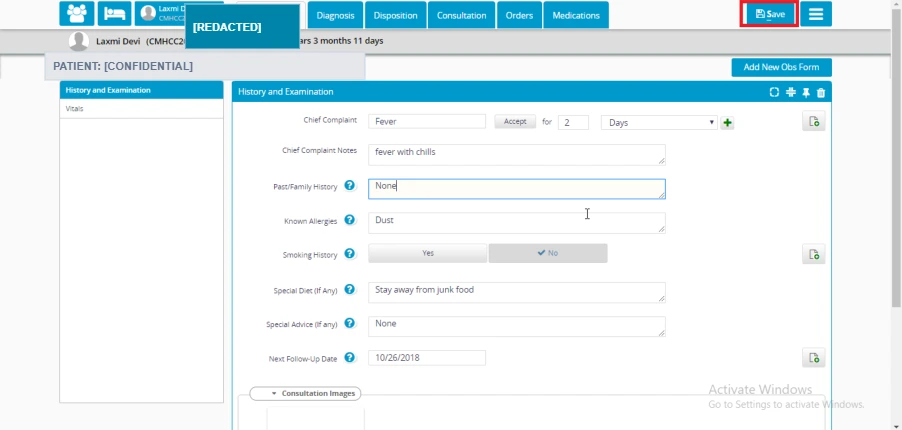
Support structured history-taking, examinations, progress notes and clinical documentation.
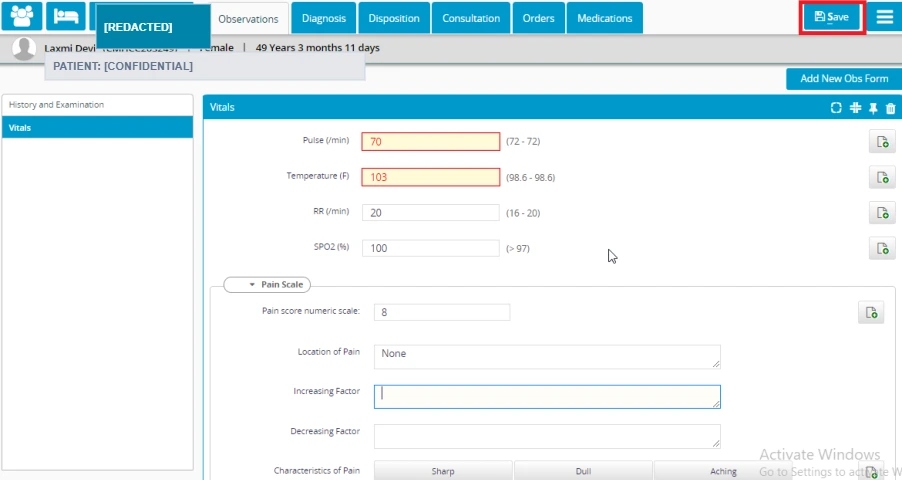
Capture patient observations and vital parameters as part of the clinical encounter.
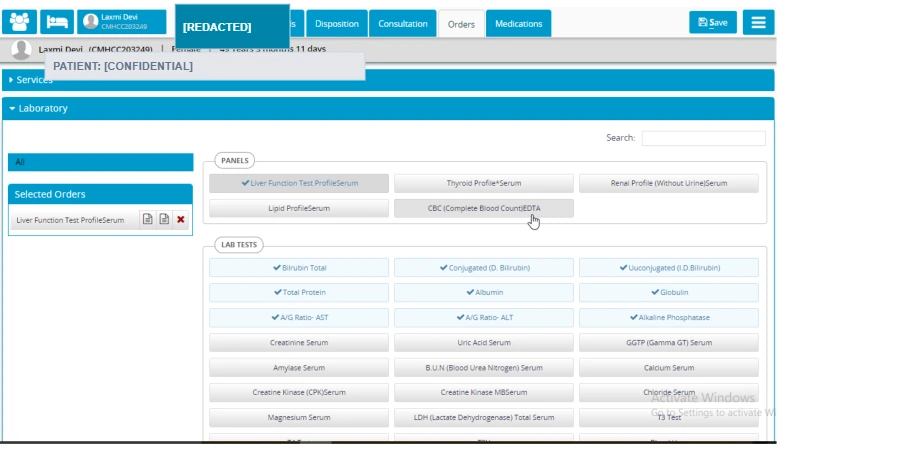
Initiate laboratory investigations and other clinical service requests from the patient workflow.
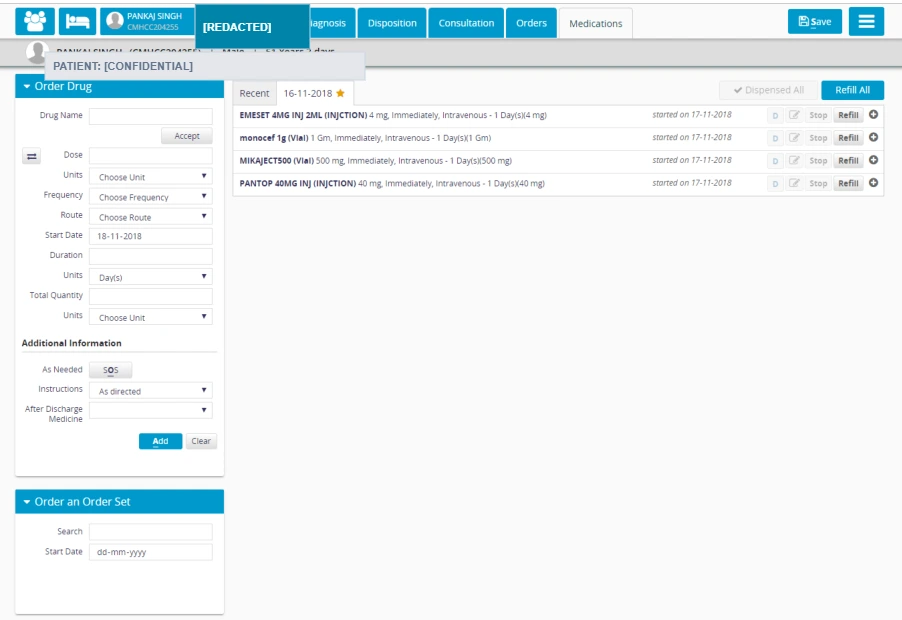
Record prescribed medicines and connect medication requests with relevant hospital workflows.
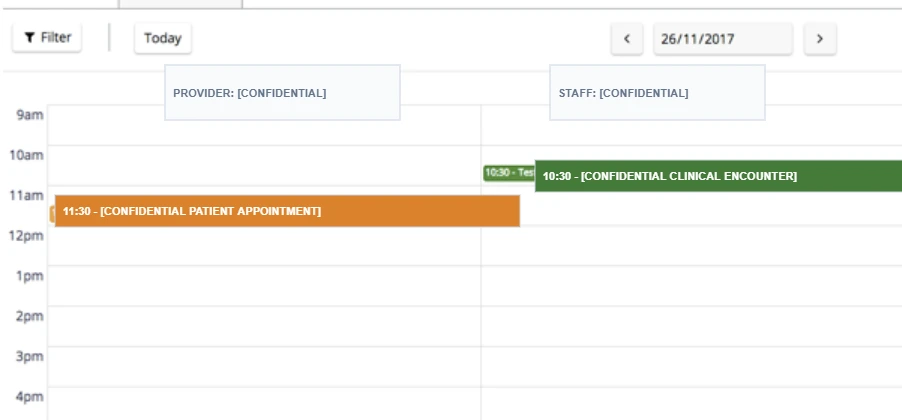
Manage provider schedules, patient appointments, service calendars and appointment status.
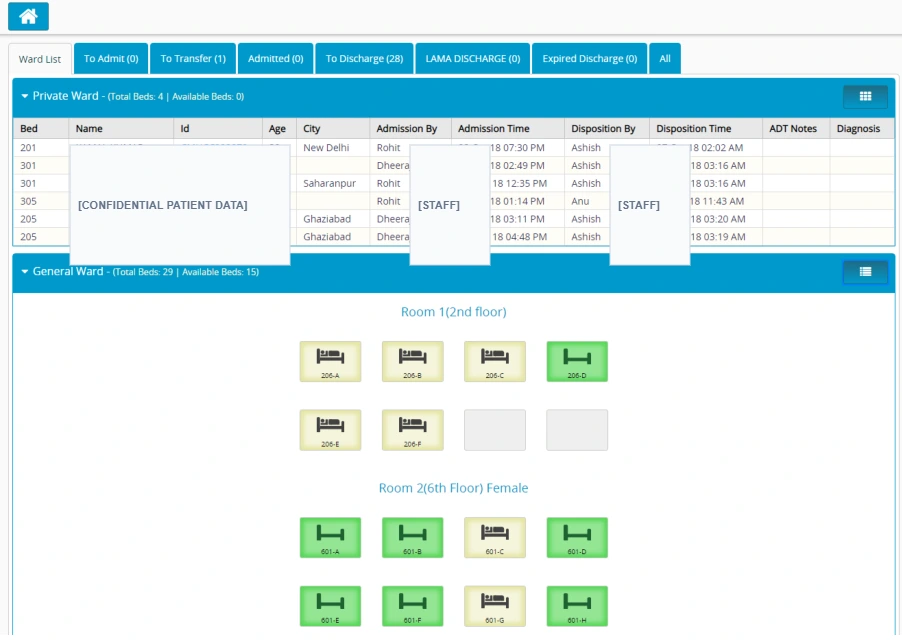
Monitor bed availability, ward allocation, admissions and inpatient occupancy.
Manage medicine catalogues, product information, inventory and pharmacy-related operations.
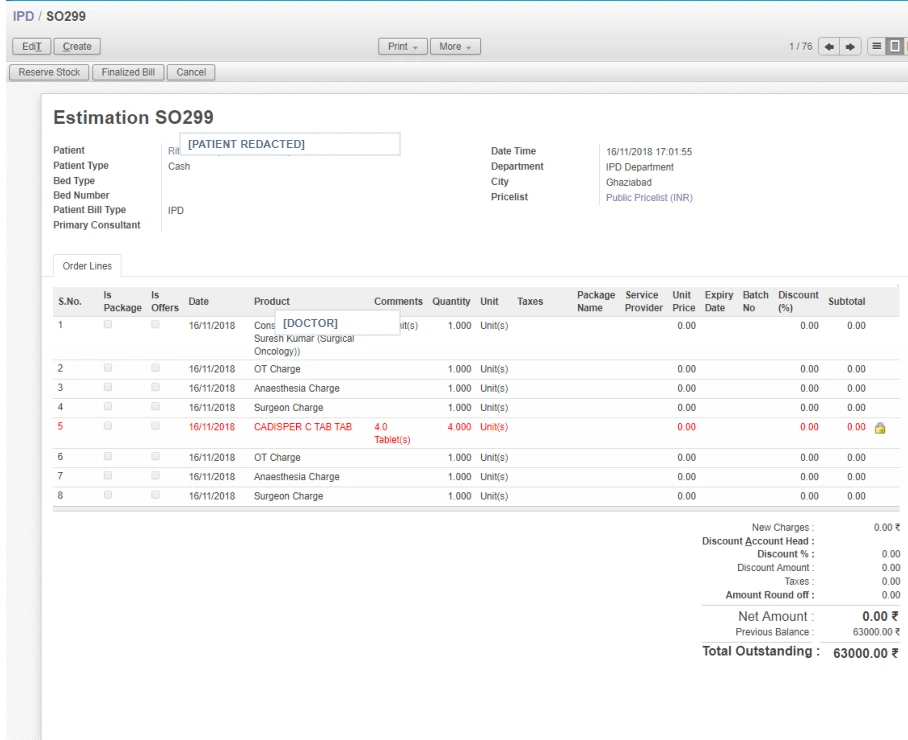
Support service billing, draft bills, payments, advances and financial transactions.
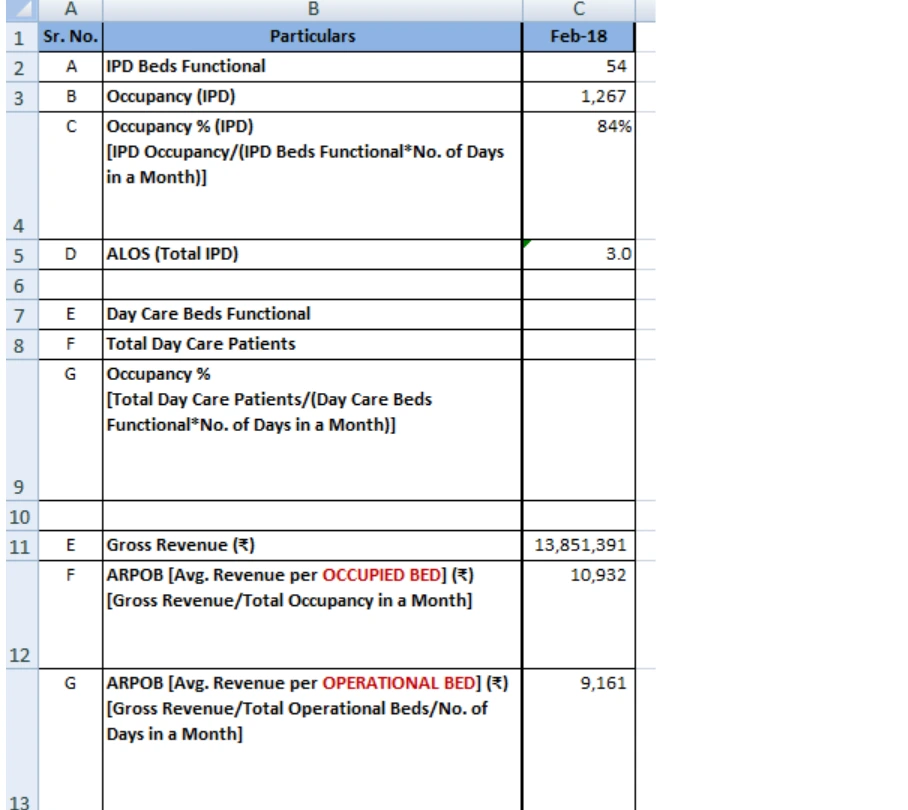
Generate operational reports covering collections, service volumes, bed utilisation and departmental revenue.
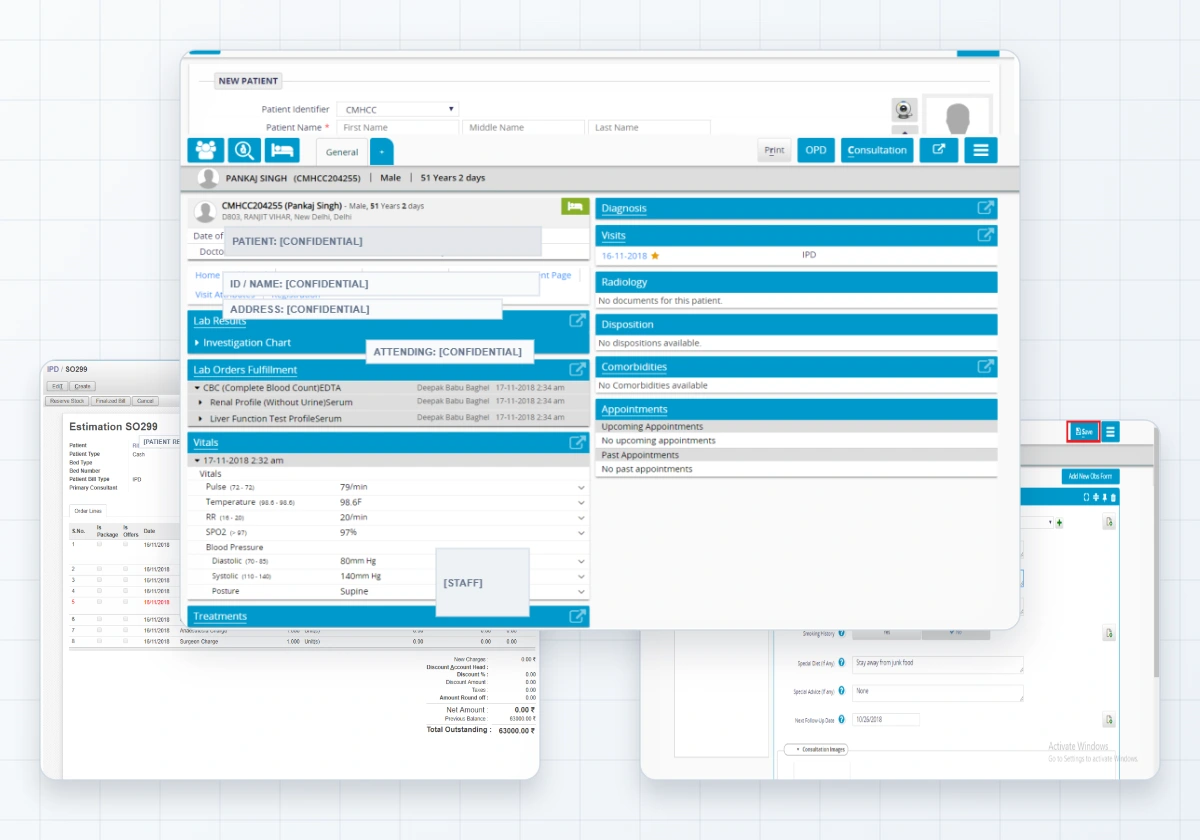
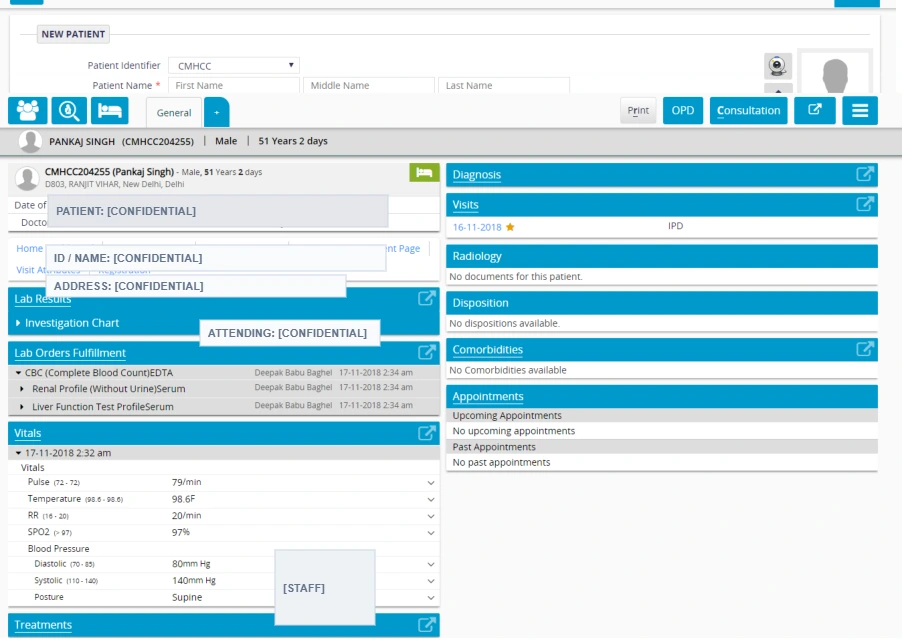
These screens illustrate the clinical and operational workflows implemented within the hospital management environment, including patient registration, consultation, medication orders, bed management and reporting.
Medical imaging generates a continuous stream of studies that require specialist interpretation. TensorFlow-based image analysis was developed to help identify potentially abnormal radiographs and support prioritisation within radiology workflows, while keeping clinical interpretation with the radiologist.
In high-volume imaging centers, radiographs are typically reviewed in simple arrival sequence. The applied computer-vision model evaluates radiographs as they enter the DICOM store, assessing visual patterns for signs of common cardiopulmonary abnormalities.
Studies showing potential abnormalities can be elevated in the radiologist's pending worklist, helping clinical specialists review potentially urgent or high-acuity studies earlier in their clinical shifts.
Computer-vision models process medical images to identify patterns associated with potential abnormalities.
Suggested regions of interest can help direct attention to areas requiring clinical assessment.
Potentially abnormal studies can be highlighted within imaging workflows for radiologist review.
Algorithmic output supports the review process; it does not replace medical interpretation.
Diagnostic centres need visibility into patient flow, imaging resources, service turnaround times and financial performance. iDoc-Lx brings operational workflows and reporting into a unified diagnostic management environment.
Organise patient registration, appointment flow and diagnostic service queues.
Analyse the stages from patient billing through scanning, reporting and dispatch.
Review imaging equipment usage and diagnostic service activity.
Bring operational and financial indicators together across diagnostic locations.
The hospital management environment was built using heavily customised Brahmi and Odoo foundations. The engineering work extended beyond installation and configuration, adapting clinical, administrative and financial workflows to the operational needs of hospitals.
Customisation of hospital-facing clinical processes, patient encounters, medical records and healthcare service workflows.
Customisation of business processes supporting hospital administration, financial workflows, pharmacy, inventory and operational reporting.
Enterprise healthcare systems require the coordination of multiple departments, data flows and user roles. The engineering challenge lies in connecting these functions without disrupting the practical workflows of clinical teams.
Read the Engineering Case StudyThe iDoc-HMS platform has published deployment references across hospital and diagnostic environments in India, reflecting experience with clinical operations and institutional workflows.
Whether modernising hospital operations, connecting diagnostic workflows or developing applied medical AI, successful healthcare systems begin with an understanding of how clinicians and institutions actually work.